
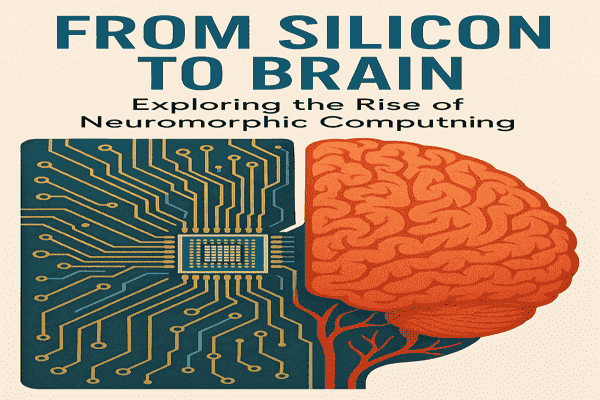
Introduction: The Brain Behind the Machine
Artificial Intelligence (AI) has transitioned from futuristic fantasy to foundational technology. It's now embedded in everything from your smartphone’s virtual assistant to the complex systems powering autonomous vehicles and intelligent manufacturing. Whether it's streamlining home automation or revolutionizing healthcare diagnostics, AI is no longer optional—it's essential. But as our ambitions for AI grow, traditional computing architectures are struggling to keep pace.
That’s where neuromorphic computing enters the picture—an innovative leap forward modeled on how the brain naturally processes information, learns, and adapts. By mimicking biological neurons and synapses, neuromorphic systems promise a future where machines think more like us—learning, adapting, and performing in real time while consuming far less energy.
Whether you're a curious learner, a tech enthusiast, or a developer hunting for neuromorphic computing projects or resources, this article breaks it all down—from history to real-world use cases.
🧬 What Is Neuromorphic Computing?
Neuromorphic computing refers to building computer systems modeled on the human brain’s neural networks. Unlike traditional systems that separate memory and processing, neuromorphic computers use spiking neural networks (SNNs) and specialized hardware known as neuromorphic chips.
These chips simulate neurons using electrical spikes—short bursts of energy that transmit signals—just like real biological neurons. The result? Faster learning, reduced power consumption, and improved ability to process information on the fly.
📜 A Brief History: Where It All Began
The concept of neuromorphic computing was first introduced in the 1980s by Carver Mead, who envisioned circuits that mimicked biological behavior. Though the technology was far ahead of its time, today’s advances in AI, neuroscience, and chip design have brought his vision closer to reality.
Now, organizations like Intel, IBM, and leading research universities are investing in neuromorphic computing research papers, hardware, and real-world applications at a rapid pace.
🔍 What People Want to Know (Search Intent Analysis)
Here are the most common queries people search around neuromorphic computing:
- What is neuromorphic computing?
- What are real-life examples or applications?
- How does it differ from traditional AI systems?
- Are there downloadable neuromorphic computing PDFs or books?
- Can neuromorphic systems be used in robotics, edge AI, or Industry 4.0?
Let’s dive into all of that—and more.
🛠 Real-World Applications of Neuromorphic Computing
1. 🔌 Edge AI and IoT
Chips like Intel’s Loihi bring brain-inspired intelligence to edge devices such as smart sensors, wearables, and hearing aids, allowing them to process data locally and reduce reliance on the cloud.
2. 🤖 Robotics
Neuromorphic robots like iCub use real-time learning to identify objects, adapt to their environment, and even “learn by doing,” mimicking how humans interact with the world.
3. 🏭 Industry 4.0
In manufacturing, neuromorphic systems are used for predictive maintenance, real-time pattern recognition, and defect detection—key features in smart factory automation.
4. 🚗 Autonomous Vehicles
With their ability to process visual input like the human brain, neuromorphic chips enable real-time decision-making, a crucial feature for self-driving cars navigating complex environments.
⚙️ Innovations in Neuromorphic Chips
The neuromorphic landscape is rapidly evolving. Here are some notable chips:
- Intel Loihi: Features over 130,000 artificial neurons and supports local learning.
- IBM TrueNorth: Designed with over 1 million neurons; used for complex cognitive tasks.
- SpiNNaker (University of Manchester): Emulates over 1 billion neurons, aiming to simulate full-brain activity.
These chips consume a fraction of the power needed by conventional CPUs or GPUs, making them ideal for mobile and embedded AI.
📚 Resources to Learn and Explore Further
📘 Recommended Books:
- “Introduction to Neuromorphic Computing” – Andre van Schaik
- “Brain-Inspired Computing: Theories and Applications” – Kaushik Roy
📄 PDFs and PPTs:
- You can explore in-depth research through platforms like IEEE Xplore, arXiv, and Academia.edu, where a wealth of neuromorphic computing studies and technical papers are available.
- University lectures and slide decks often titled "neuromorphic computing ppt" provide foundational insights.
🎓 Questions for Exams & Interviews:
- What is a spiking neural network?
- How do neuromorphic chips differ from CPUs/GPUs?
- What are the energy-saving benefits of neuromorphic computing?
🚧 Challenges Ahead & Future Outlook
Despite the hype, there are still hurdles:
- Limited software support for programming SNNs.
- No standard benchmarking tools to compare systems.
- Adoption barriers, especially for teams unfamiliar with neural architectures.
Still, with the global AI demand exploding, neuromorphic computing isn’t just promising—it’s inevitable. The goal isn’t to discard traditional AI—it’s to build upon it, pushing its boundaries through more brain-like, adaptive systems.
🧭 Conclusion: The Computer of Tomorrow
Neuromorphic computing isn't science fiction—it's happening now. By taking cues from the brain, we're reimagining how machines learn, adapt, and evolve.
As researchers, developers, and curious minds, we stand on the edge of something transformative. The journey from silicon to synapse is just beginning.
Stay curious. Stay inspired. Keep exploring.
TL;DR – Key Takeaways
- Neuromorphic computing mimics brain function using spiking neural networks and neuromorphic chips.
- Delivers energy efficiency, real-time learning, and adaptive processing.
- Used in robotics, edge AI, autonomous vehicles, and Industry 4.0.
- Leading the charge in neuromorphic hardware are chips like Intel’s Loihi, IBM’s TrueNorth, and the University of Manchester’s SpiNNaker, each pushing the envelope of brain-inspired computing in its own way.
- Resources available: books, PDFs, PPTs, and research repositories.
- Still growing, but positioned to be a vital pillar in future AI systems.