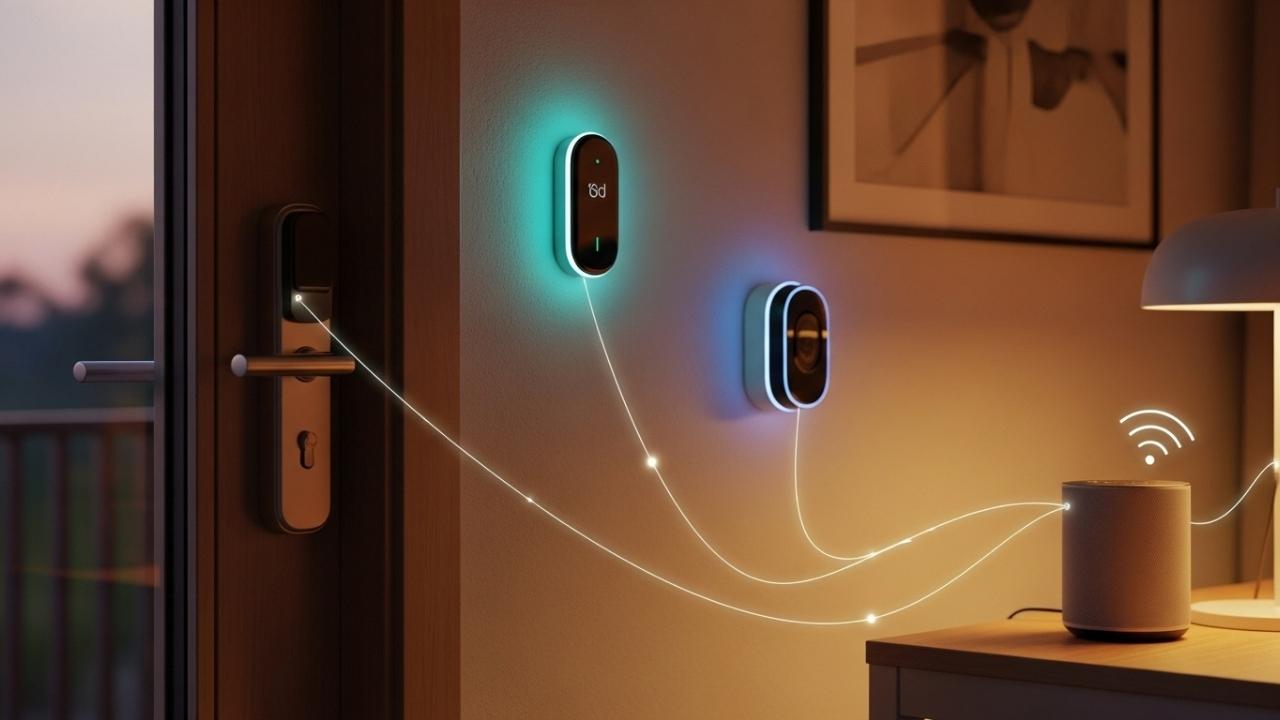

When I consider the challenges of cybersecurity, I always go back to one concept: you can't trust anyone anymore.
In the past, companies depended on a traditional network security model. The concept was simple once you were inside the network perimeter, you were trusted. But as you and I both know, these are different times. Implicit trust is dangerous for hackers, insider threats, and stolen credentials.
This is where Zero Trust Architecture (ZTA) comes in. Instead of trusting that everything within the trust network is safe, the zero trust model turns that idea on its head. It is written: never trust, always verify.
Getting a Handle on the Zero Trust Model
The zero trust model is not a product it is a security technique, a method of thinking about security architecture.
Core concept:
- Every user and every device has to be validated.
- Least-privilege access should be enforced everywhere.
- Access controls are applied at all times, not only once.
This way, even if a hacker gains access to one system, they cannot spread easily. In traditional networks, implicit trust often allows attackers to move laterally. Zero trust security stops that by enforcing authentication and authorization throughout the process.
Analogy: Imagine someone walking into your office building. You wouldn’t allow them to see every room just because they passed the front desk. Instead, you check them before entering secure locations. That’s exactly what zero trust does for your digital environment.
Zero Trust as a Security Model

Zero Trust is a term coined by Forrester Research, but is now supported by NIST and the Cybersecurity and Infrastructure Security Agency (CISA). According to NIST, zero trust architecture is now a core component of any organization’s security framework.
It works by:
- Establishing zero trust principles.
- Using security controls to implement those principles.
- Ensuring security teams apply them consistently across cloud, endpoints, and networks.
When you hear that zero trust is a security framework, remember it’s not just technology it’s policy, design, and execution.
Zero Trust Core Principles
The fundamental principles of zero trust include:
- Never Trust, Always Verify – Don’t treat any user or device as safe. All requests must be authenticated.
- Least Privilege – Only give minimum access required, limiting attack surfaces.
- Continuous Monitoring – Real-time tracking, analytics, and automated security responses.
- Network Segmentation – Dividing networks into smaller zones to stop lateral movement.
- Adaptive Access Control – Access depends on device health, location, and risk class.
Together, these principles form a precise architecture that enforces access while reducing risks.
Zero Trust Architecture in Action
Zero trust isn’t just theory it’s applied in layers:
- Identity and Access Management (IAM): All users must authenticate, often with multi-factor methods (biometric, device, or token).
- Endpoint and Device Security: Every endpoint (laptop, phone, IoT device) is verified for compliance.
- Workload Protection: Applications are monitored for unusual activity with policies ensuring security.
- Data Protection: Sensitive data is encrypted and tracked, feeding into SIEM tools.
- Continuous Verification: Users and devices are constantly re-verified in real time.
This layered security makes it impossible for hackers to log in once and roam freely they are constantly restricted and observed.
Advantages of a Zero Trust Approach
Deploying zero trust delivers powerful benefits:
- Reduce Risk of Breach – Eliminates implicit trust.
- Prevent Lateral Movement – Attackers cannot propagate inside the network.
- Protect Sensitive Data – From healthcare to finance, customer data is safer.
- Work with Modern Cloud Environments – Supports cloud and hybrid security models.
- Enhance Security Posture – Security teams focus more on prevention than chasing threats.
In short, the advantages far outweigh the challenges of implementing zero trust.
Zero Trust vs Traditional Network Security
Traditional Network Security:
- Relies on perimeter defense.
- Once inside, users often have wide access.
- Built on trusted assumptions that no longer apply.
Zero Trust Architecture:
- Never trust, always verify.
- Access is partitioned, monitored, and controlled.
- Solves perimeter-busting threats in today’s cloud-driven environment.
This is why experts argue that zero trust is no longer optional it’s essential.
The Zero Trust Maturity Curve
Zero trust is not implemented overnight. Instead, organizations move through stages:
- Awareness – Understanding the concept.
- Planning – Mapping data flows and defining policies.
- Implementation – Deploying IAM, segmentation, and controls.
- Optimization – Leveraging analytics and monitoring.
- Mature ZTA – Full, enterprise-wide adoption.
This incremental approach prevents overloading legacy systems while building a modern, secure foundation.
Zero Trust | Core Principles and Implementation
The zero trust security model is based on a few powerful, simple concepts. Let’s go through them one at a time.
Never Trust, Always Verify
Traditional security was based on the premise that if someone was on the other side of the network perimeter, they were safe. With remote work, cloud applications, and mobile devices, that assumption is no longer valid.
In Zero Trust Architecture (ZTA), you must authenticate every user and device in order to grant access. This applies to:
- Employees connecting from the office
- Cloud computing remote users
- Contractors, partners, or even IoT devices
Authentication is enforced at every stage, not just once.
Principle of Least Authority (POLP)
Another core component is the principle of least privilege. This means granting users or devices only the minimum access necessary to perform their role.
- Privileges are restricted to minimize risk in case of a breach.
- Access is compartmentalized to stop hackers from moving freely.
- Lateral movement throughout the network is prevented.
Continuous Monitoring
Zero trust is based on continuous monitoring. Even after a user authenticates, checks continue.
Analytics and real-time tracking examine:
- User or device activity
- Unusual patterns in behavior
- Security events that may indicate an attack
If something seems suspicious, controls automatically shut down access.
Adaptive Access Control
Access is context-aware and changes dynamically.
- Logging in from the office may provide full access.
- Logging in from another country may restrict permissions until extra verification is complete.
This ensures that security responds in real time, not only at login.
Zero Trust Architecture Redesigned into Layers
Like Lego blocks, zero trust components can be combined to build a solid security architecture.
Identity & Access Management (IAM)
The foundation of ZTA is identity and access management:
- All users must authenticate before access.
- Multi-factor authentication (MFA) is required.
- User and device identity is continuously validated.
This ensures that a stolen password alone is not enough to compromise the system.
Endpoint and Device Security
Endpoints are often the weakest link. Zero Trust enforces strict controls for laptops, phones, and IoT sensors:
- Devices must meet security standards (patched, malware-free).
- Non-compliant devices are denied access.
- All endpoints remain under constant scrutiny.
Network Segmentation
Instead of a single trust zone, zero trust divides the network:
- Workloads are isolated.
- Access is restricted to specific areas.
- Segmentation stops lateral movement.
Workload and Application Security
Applications and workloads are also protected:
- Apps are monitored for suspicious behavior.
- Application-level controls enforce secure communication.
- Inter-workload access is validated in real time.
This ensures attacks are contained quickly.
Data Security and Privacy
Data is the focal point of zero trust. Security includes:
- Encryption at rest and in transit
- Strict user access policies
- Real-time monitoring through SIEM tools
Even if data is stolen, encryption makes it useless without keys.
Zero Trust Access (ZTA)
Zero Trust Network Access (ZTNA) is key to ZTA:
- Unlike VPNs with global access, ZTNA applies granular controls.
- Only authorized resources are visible.
- Policies adapt dynamically.
- Security teams maintain full visibility of access requests.
This reduces the attack surface and limits damage if breaches occur.
Zero Trust Example Use Cases
Working in the Cloud from Remote Locations
Employees accessing cloud environments are continuously validated, monitored, and granted access only to specific workloads.
Healthcare and Sensitive Data
Hospitals protect patient records so that only authorized doctors or nurses working on a case can view them.
Tackling Lateral Movement in Finance
In a traditional system, hackers could move sideways. With zero trust, segmentation and monitoring stop them quickly.
How Zero Trust Is Implemented in Organizations
If you’re wondering how to get started, here’s a simplified roadmap:
- Review Security Posture – Identify gaps in current defenses.
- Map Data Flows – Track how sensitive data moves in your systems.
- Deploy Identity & Access Controls – Begin with authentication and access management.
- Segment Your Network – Separate workloads and restrict access.
- Continuous Monitoring – Use analytics and SIEM tools to catch anomalies.
- Iterate and Improve – Mature your zero trust model step by step.
Summary
Zero Trust Architecture (ZTA) is a new security model that follows the concept of 'never trust, always verify'. Unlike traditional network security, which was based on the perimeter, zero trust constantly authenticates every user and device, implements least-privilege access and strong access control.
With identity and access management (IAM), endpoint protection, network segmentation and continuous monitoring, organizations can minimize the risk of data breaches and thwart lateral movement. AWS Cloud Use Cases, AWS Healthcare Use Cases, AWS Finance Use Cases demonstrate how it protects sensitive data in production cloud deployments.
Zero trust is an essential business security measure that encourages companies to adopt and implement it to improve their security posture and be ready for future threats in a connected world.