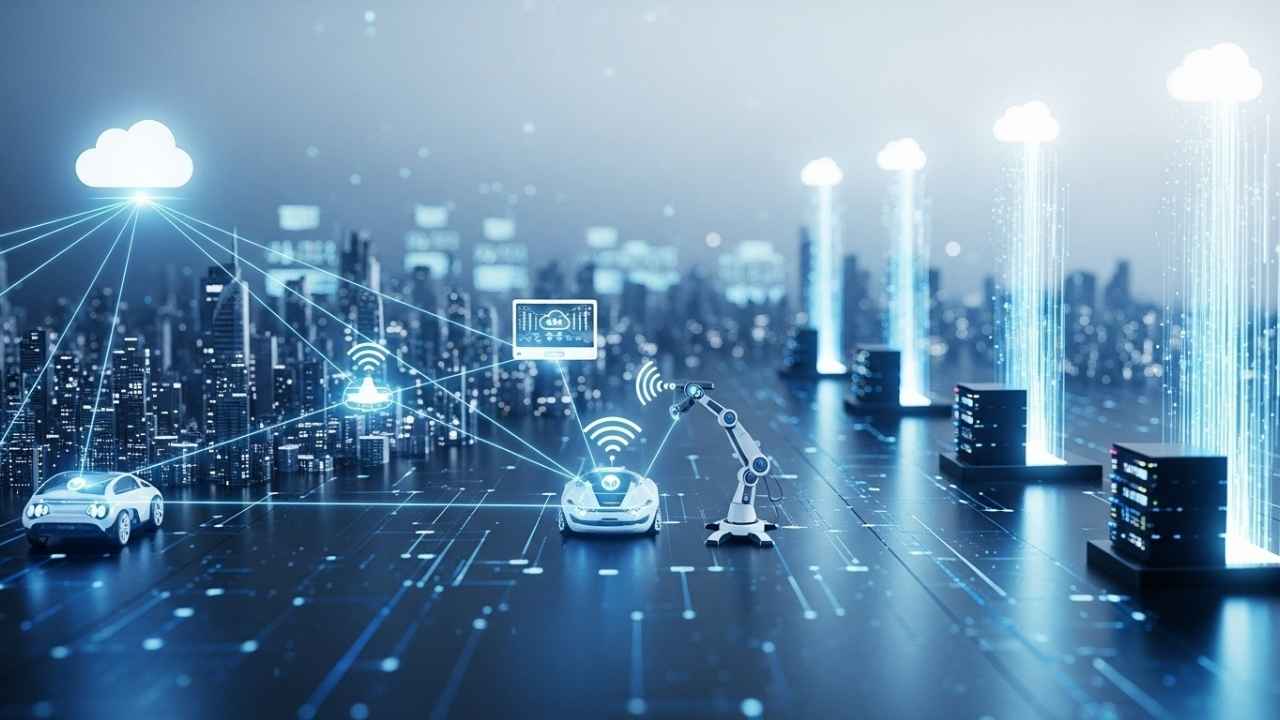
When I think about the internet of things (IoT) I imagine millions of connected devices from smart thermostats in homes to industrial robots in factories all generating massive amounts of data every second.
You likely use some form of IoT device on a daily basis, whether that be a smartwatch, voice assistant or even a connected car.
Each of these devices generates real-time data that must be processed fast and in a secure manner.
Now here's the catch: conventional cloud computing was not built to deal with this firehose of data. "Putting everything in the cloud and pushing all that back and forth takes time."
The more data that is being generated by the IoT devices, the more the delay. In applications such as healthcare monitoring or autonomous driving, those delays can be life-threatening.
What is Edge Computing?
At its core, edge computing is a method of processing data closer to the source rather than depending on centralised data centres. Instead of sending all data generated by IoT devices to a faraway cloud data center, edge computing processes data in close proximity to the device.
Think of it like this:
- Cloud computing | Every order and every message needs to go to the cloud, get processed and then return.
- Edge computing | Local data is processed on the edge node or edge device first. Only the minimum amount gets sent to the cloud server for further data analysis or storage.
This approach is also referred to as distributed computing because the work is distributed between edge devices, fog computing nodes, and the cloud.
The Growth of IoT and Its Challenges

The IoT ecosystem has exploded in recent years. From the IoT applications we have around our homes, such as smart locks and refrigerators, to the IIoT systems that control factories and supply chains, the number of connected devices continues to increase.
But this growth comes with problems:
- Volume of Data – The volume of data generated from billions of IoT sensors is tremendous. Everything going to the cloud introduces latency.
- Real-time requirements – Most IoT systems need data to be processed in real time. Consider a self-driving car making a split-second decision.
- Data Privacy and Security – Sensitive information such as patient health records or location data need to be handled carefully. Having it travel over networks is dangerous.
- Computing Infrastructure – Each IoT deployment is beyond the current capacity of any cloud data center. Bandwidth and storage are finite.
This is why edge computing in combination with IoT has become critical.
IoT and Edge Computing Combined
So what is the relationship between edge computing and IoT?
- IoT devices (sensors, cameras, wearables, etc.) are used for collecting data.
- Rather than moving all data to the cloud, data can be processed locally by the device or a node near the device.
- Only the data that is absolutely necessary is sent to a cloud server for further processing or storage.
This type of computing is based on a tradeoff between speed, cost, and privacy of data. By distributing data processing nearer to the point of creation, you gain the benefits of faster decision making and reduced risk.
Example: In industrial IoT, a sensor on a machine can detect overheating. With edge computing, the edge device can immediately shut down the machine before damage occurs, rather than waiting for instructions from a remote cloud server.
Real-Time Data and the Edge
One of the biggest advantages of edge computing is that it can process data in real time. In many IoT applications, a small time delay can be very important.
Imagine:
- A connected car needs to process data in real time to prevent collisions.
- A smart medical device should notify doctors right away if patient vitals change.
- A factory robot must change rapidly in response to changing conditions.
In such cases, edge computing provides the opportunity for devices to take action immediately by processing data at the edge. This fast data handling is one of the major advantages of edge computing over cloud computing.
Edge Compute and Devices
Before you can understand the effects of edge computing on next-generation IoT infrastructures, you must understand edge devices.
An edge device is any device with enough compute resources to crunch data locally. This includes:
- Routers
- Gateways
- Smartphones
- Industrial controllers
- IoT hubs
These devices are mini edge servers, which reduce the need for necessarily transferring all data to the cloud. The result is faster decision making, less strain on the network, and improved data management.
Edge Computing vs Cloud Computing for IoT
It bears stressing that this is by no means a contest of one against the other. Edge and cloud computing go hand in hand.

- Cloud computing continues to play a significant role in long-term data storage, large-scale data analysis, and AI model training.
- Edge computing is used to enable real-time processing, data reduction, and protection of sensitive data.
In fact, most modern IoT networks are based on a hybrid computing architecture. Edge computing is for immediacy while cloud computing is for deep insights. This collaboration otherwise known as edge and cloud integration is what defines the future of the IoT ecosystem.
IoT Benefits of Edge Computing
When you deploy edge computing in your IoT implementation, you benefit from several things:
- Speed | Better performance due to closer-to-source processing of data.
- Data Privacy and Security | No data is moved out of the region, making data more secure.
- Cost Savings | Less data transfer means less bandwidth costs.
- Efficient Data Processing | Only meaningful data is processed in the cloud.
- Scalability | Can handle additional connected devices without overloading networks.
Each of these edge computing benefits has a direct effect on the way IoT systems work.
Fog Computing and Multi-Access Edge Computing
In addition to regular edge computing, two other related computing technologies are worth noting:
- Fog Computing | The layer between the cloud server and the edge device, providing additional computing capabilities.
- Multi-Access Edge Computing (MEC) | Extends the edge computing model into mobile networks and provides access to move data closer to the user to operate on mobile edge computing platforms.
Both of these will play a role in the future of IoT, especially as IoT devices produce more and more data every day.
Real World Applications of IoT with Edge Computing
Edge computing is more than a concept—it is a paradigm that is transforming industries today. By processing data closer to where it’s generated, IoT devices are faster, smarter, and more reliable.
Areas of Application
- Healthcare: Smart devices track vital signs of patients and notify healthcare professionals in real time to prevent critical care delays.
- Autonomous Vehicles: Connected cars use data analysis in real time to avoid accidents and make decisions about driving based on live data.
- Manufacturing (IIoT): Factory sensors monitor fault conditions and disable equipment locally, avoiding expensive breakdowns.
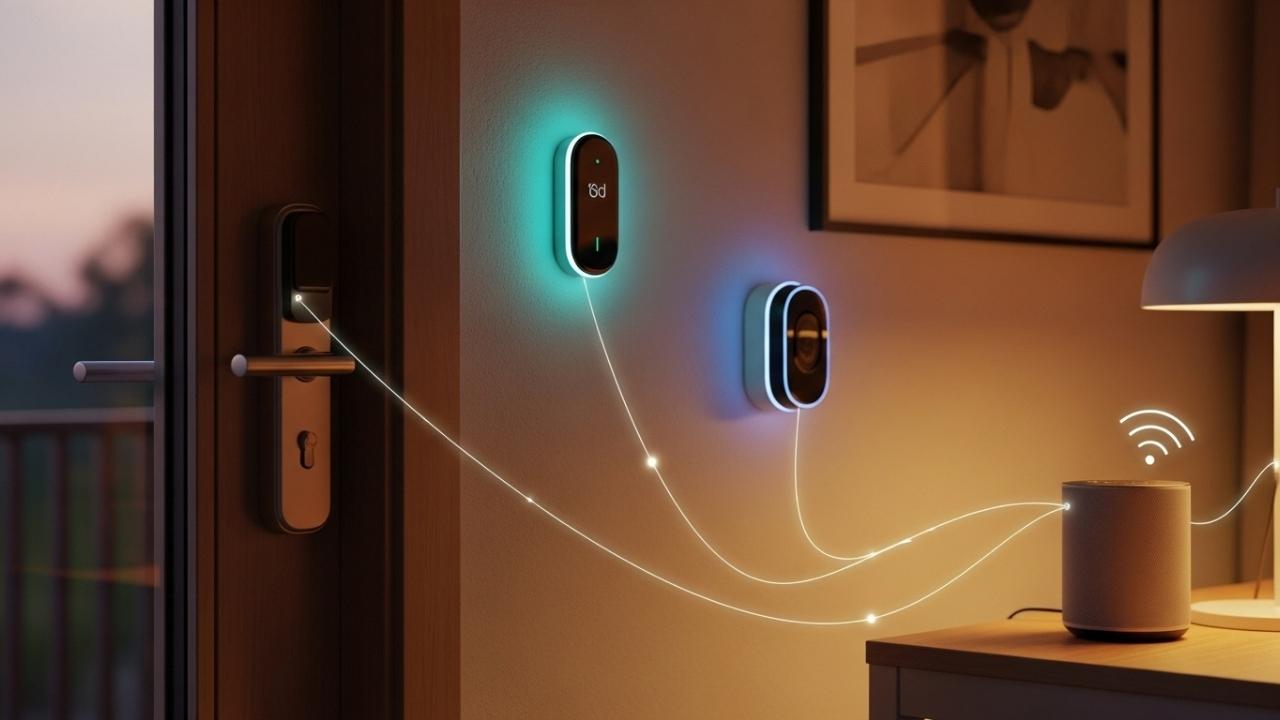
- Smart Home: From thermostats to security systems, devices within the home instantly respond without delay from the cloud.
- Retail and Supply Chains: Edge IoT is used to track shipments, monitor inventory levels, and optimize logistics in real time.
These examples demonstrate the direct impact of edge computing on the speed, security, and efficiency requirements of IoT.
Top Issues in Implementing IoT + Edge Computing
Despite limitless potential, organizations encounter challenges when combining IoT and edge computing:
- Infrastructure Costs – Edge servers, gateways, and IoT hubs are expensive to set up.
- Security Risks – More connected devices mean more entry points for cyberattacks.
- Data Standardization – Multiple vendors and device types make interoperability difficult.
- Scalability Issues – Adding millions of devices puts pressure on both edge and cloud resources.
- Maintenance – Distributed software and devices are hard to patch and update at scale.
Without a proper strategy, these difficulties may nullify the advantages of IoT and edge computing convergence.
Edge + Cloud: A Hybrid Future
Edge computing and cloud computing are not competitors but complements. Together, they form a hybrid model where:
- Edge addresses immediacy – Local decision-making for real-time, low-latency, and privacy.
- Cloud delivers intelligence – Centralized storage, big data analytics, and AI model training.
This hybrid model allows organizations to merge speed + scale, which is critical as IoT expands across industries.
Benefits Driving Adoption
Companies that have embraced IoT with edge computing report measurable gains:
- Latency: Real-time decisions with minimal delay.
- Cost Efficiency: Local filtering reduces bandwidth and storage costs.
- Increased Security: Sensitive data stays near its source.
- Reliability: Systems continue to function even if cloud connectivity is lost.
- Scalability: IoT ecosystems can grow without overloading networks.
These advantages are why edge computing is becoming the foundation of next-generation IoT systems.
New Trends in IoT and Edge Computing
Looking ahead, several trends are shaping the future:
- Higher Speed with 5G: Faster connectivity makes IoT devices more powerful when paired with edge nodes.
- AI at the Edge: Edge AI chips allow devices to make smart decisions without relying on the cloud.
- Fog Computing Growth: Provides a middle layer to balance workloads between edge and cloud.
- Multi-Access Edge Computing (MEC): Telecom networks bring compute power closer to mobile users.
- Green IoT: Energy-efficient edge devices reduce environmental impact.
These trends indicate IoT with edge computing will evolve into a faster, smarter, and more secure ecosystem.
Summary
The article describes how the rapid proliferation of IoT devices generates huge volumes of real-time data, beyond the capacity of mainstream cloud computing.
It presents edge computing as a solution for processing data closer to the source, reducing latency, enhancing security, and improving efficiency.
Applications include healthcare, autonomous vehicles, industrial automation, smart homes, and supply chains. Challenges such as infrastructure, scalability, and security are addressed, while the hybrid role of edge and cloud computing is emphasized.
Emerging trends like AI at the Edge, fog computing, MEC, and 5G will shape the future of IoT ecosystems. Together, IoT and edge computing make digital solutions faster, safer, and smarter.